Discover how "Say NO to Alzheimer's" offers personalised disease risk analysis and tailored prevention plans. Learn about the five distinct types of Alzheimer's and our innovative approach to early stage reversal. Join us on a journey to reclaim cognitive health, available globally from Brighton & Hove.
Say NO to Alzheimer's; Start Healing
At Say No to Alzheimer’s, we take a two-pronged approach: prevention and reversal. First, we assess your risk for chronic disease—especially Alzheimer’s—using evidence-based tools. We guide you through a personalised lifestyle protocol rooted in core pillars: nutrition, movement, sleep, stress mastery, mental stimulation, detoxification, and targeted supplementation. If you’re already experiencing early symptoms, don’t lose hope—we’re equipped to help you slow, halt, and even reverse cognitive decline.
Our Alzheimer's Prevention and Early Stage Reversal Services

Understanding Alzheimer's Disease
Alzheimer's is the most common form of dementia, a group of brain disorders that cause memory loss and cognitive decline. It’s primarily characterized by the build-up of two types of abnormal proteins in the brain: tau tangles inside nerve cells and amyloid plaques outside them. These proteins accumulate in areas affecting memory and thinking, such as the cortex and hippocampus.

Early Stage Alzheimer's Intervention
Alzheimer’s is not just an old persons disease. It can strike anyone at any age, especially once we hit 40. Early onset Alzheimer’s is becoming more prevalent, creating many more victims, most of whom just keep going, putting it down to "age" or stress, rather than attempting to identify what is causing their underlying condition.

Understanding Alzheimer's Disease
Despite the belief that it is mostly untreatable, we now know that there are close to 6 specific types of Alzheimer's disease. By understanding your "Type(s)" we have the skill, knowledge, and evidence to reverse some, or all, of the disease. Contact us for a free assessment, or just a chat to find out how we can help you or a loved one avoid this devastating condition.
Say NO to Alheimer's
Prevention is Powerful; Reversal is real!
Say NO to Alzheimer's; Say YES to Action!
Reviews
1 / 3
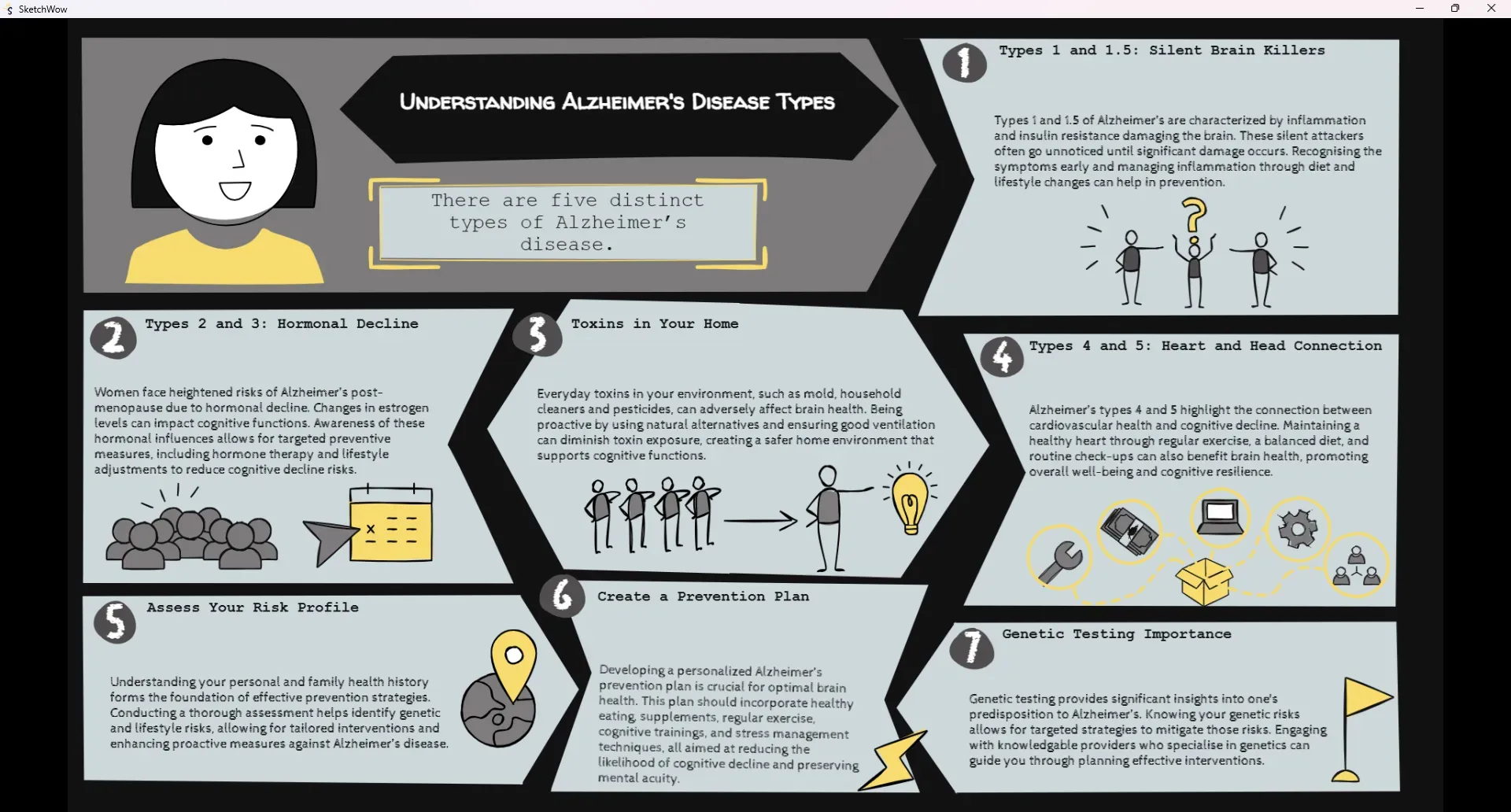
Say NO to Alzheimer's: Pioneering Disease Risk Analysis and Early Stage Reversal
Expertise in Alzheimer's Disease Risk Analysis
At Say NO to Alzheimer's, based in Brighton & Hove, we specialise in comprehensive disease risk analysis with a focus on Alzheimer's disease. We understand that Alzheimer's is not a one-size-fits-all condition; it comprises five plus distinct types, each requiring a tailored approach. Utilising advanced diagnostic tools and the latest research, we identify the specific type of Alzheimer's affecting each individual. This precise analysis enables us to develop a personalised prevention and management plan that addresses the unique aspects of the disease, aiming to halt progression and enhance quality of life.
Personalised Prevention and Early Stage Reversal Strategies
Our service goes beyond traditional care by offering early-stage reversal strategies tailored to the specific type of Alzheimer's diagnosed. We believe that early intervention is crucial, and our innovative approach combines lifestyle modifications, nutritional guidance, cognitive therapies, and cutting-edge lifestyle adjustments. By targeting the root causes and risk factors specific to the type of Alzheimer's, we empower individuals to take control of their health and work towards reversing the course of the disease. Our global digital access ensures that expert support is available to anyone, anywhere, providing hope and practical solutions worldwide.
Unique Selling Points: A Way Back Out of Alzheimer's
What sets Say NO to Alzheimer's apart is our commitment to a 'way back out' of the disease. Unlike conventional approaches that often focus solely on symptom management, we emphasise identifying the specific Alzheimer's type and addressing it comprehensively. We collaborate with pioneers in the areas we specialise in, so have access to the latest research, the most up to date theories and Case studies demonstrating success at varying levels. Our integrative care plan includes genetic and lifestyle factors. This holistic view allows us to implement targeted interventions that can slow, stop, or even reverse early-stage Alzheimer's. Our dedication to personalised care, cutting-edge science, and global accessibility includes us with the leaders in Alzheimer's prevention and early-stage treatment.
Logo Grid
Frequently Asked Questions
How long does the risk analysis and planning process take?
The initial risk analysis typically takes up to 8 weeks, including data collection and assessments. This is because we need to grow your DNA sample in the lab, to fully map your personal blueprint. Personalised planning and recommendations will commence shortly afterwards, with full support as and when needed.
However, in the meantime, we will commence with lifestyle advice and responding to lab results from any blood tests so your journey to better health starts almost as soon as you join one of our programs.
Do you offer support for family members and caregivers?
Yes, we provide educational resources, counseling, and support strategies for family members and caregivers to help them understand the disease and manage care effectively.
What do you mean by early-stage reversal of Alzheimer's?
Early-stage reversal refers to interventions that may slow down, halt, or partially reverse cognitive decline in the initial phases of Alzheimer's. This involves personalised treatment plans targeting the specific type and underlying causes of the disease.
What are the five main types of Alzheimer's disease?
The five main types of Alzheimer's disease include Late-Onset Alzheimer's, Early-Onset Alzheimer's, Familial Alzheimer's, Mixed Alzheimer's, and Alzheimer's with Lewy Bodies. Each type has distinct causes and characteristics.
How do you determine the type of Alzheimer's disease a person has?
We use a comprehensive approach hat can include clinical testing, genetic testing, biomarker analysis, and imaging studies to accurately classify the type of Alzheimer's, which informs the tailored treatment strategy. However, in many cases, a conversation and chat during which you answer some questions, will often point us in the right direction, allowing us to start a program as early as possible, without wasting time and resources on clinical tests.
Connect with our experts to explore your personalied path to Alzheimer's prevention and early reversal.
Schedule your consultation to take the first step towards a tailored disease risk analysis and actionable plan.